A trophy says "you played." A personalized gift says "I was watching."
Kids feel the difference, even if they can't articulate it.
This is part of our Complete Guide to Youth Sports Gifts.
Why personalization matters more for kids than adults
Give an adult a monogrammed anything and they'll say thank you and mean it — but they already know who they are. A ten-year-old doesn't yet. Kids are in the middle of writing the story of themselves: deciding whether they're "a soccer kid," whether they're brave, whether they're the type who gets back up. A gift that reflects them back — their name, their number, their sport, their face mid-stride — becomes evidence in that story. It says: this is who you are, and someone noticed.
That's not sentimental hand-waving. People who study how children form identity talk about "cherished objects" — the specific, personal things a kid attaches meaning to and carries forward for years. The ones that survive aren't the expensive ones. They're the ones that feel like them. A generic trophy is about the event. A card with their name on it is about the person.
There's a memory angle too. Childhood memories anchor to concrete, sensory details — a specific jersey, a photo from a specific game, the number they wore the year it finally clicked. A personalized gift gives the memory something to hang on. Years later, the object is the doorway back to the season.
Short version: adults keep gifts because they're useful. Kids keep gifts because they say something true about who they're becoming.
Photo-based gifts
The fastest way to make a gift personal is to put your kid in it. Photos do that better than anything, and most parents already have a camera roll full of raw material.
- A framed action shot. Not the stiff posed team photo — the one where they're mid-swing, mid-save, dust flying. One great enlargement, matted and framed for their wall, beats a shelf of participation trophies.
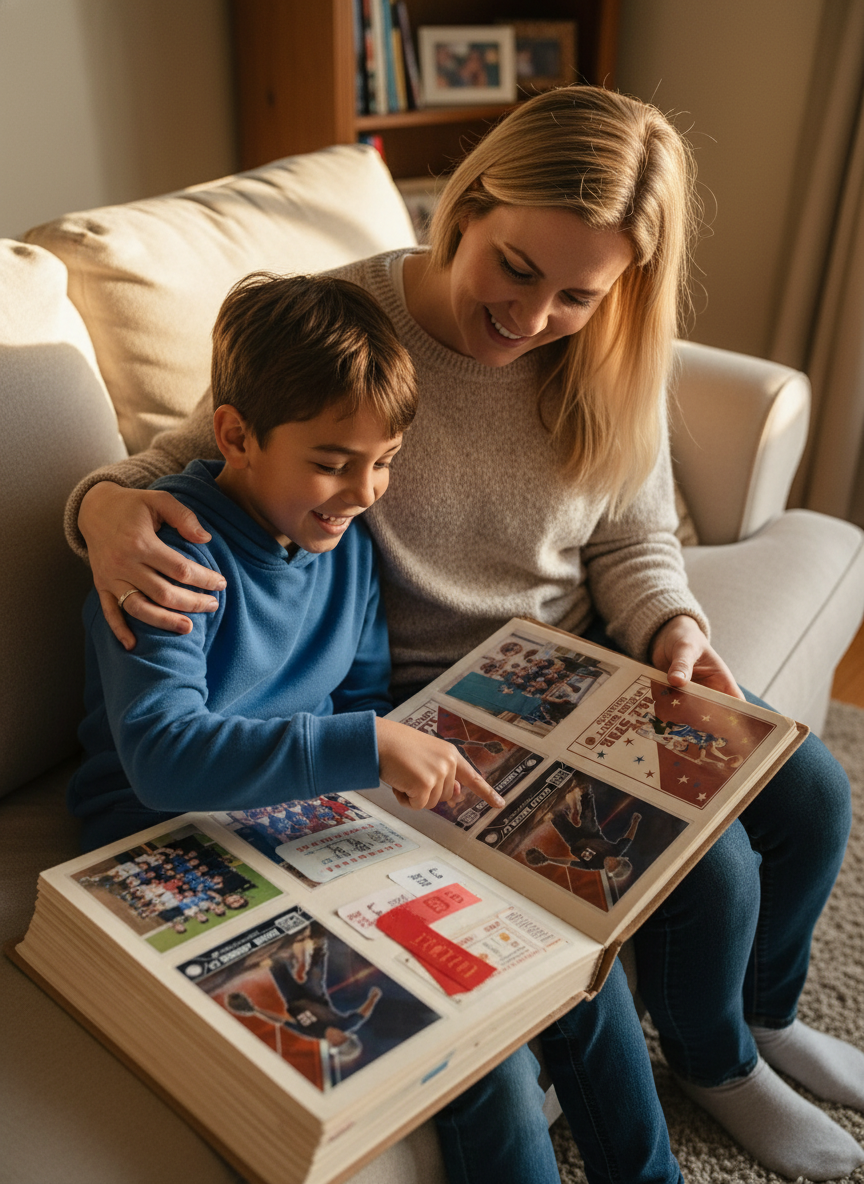
- A season photo book. Twenty pages, one per game or one per milestone, in order. Cheap to make, and kids flip through them more than you'd expect.
- A framed team photo with your kid highlighted. The same team photo everyone got — but matted with their name and number on a small plate, so it's clearly their copy, not the identical one hanging on twelve other walls.
- A "big-league" poster. A large print styled like a pro poster: their photo, name, and number, in the team colors. It goes over the bed and stays there.
- A custom photo ornament. One photo from the season and the year. It comes back out every December, which quietly builds a timeline of seasons on the tree.
The one thing photos can't quite do is feel collectible. Which is where the next one comes in.
Custom trading cards
A custom trading card is the most versatile personalized gift in youth sports. It works for:
- Birthday: one card of their current sport and team
- End of season: a card set of the whole team, one per player
- Holiday: cards from every sport they played that year
- Senior night: a career set spanning every year they played
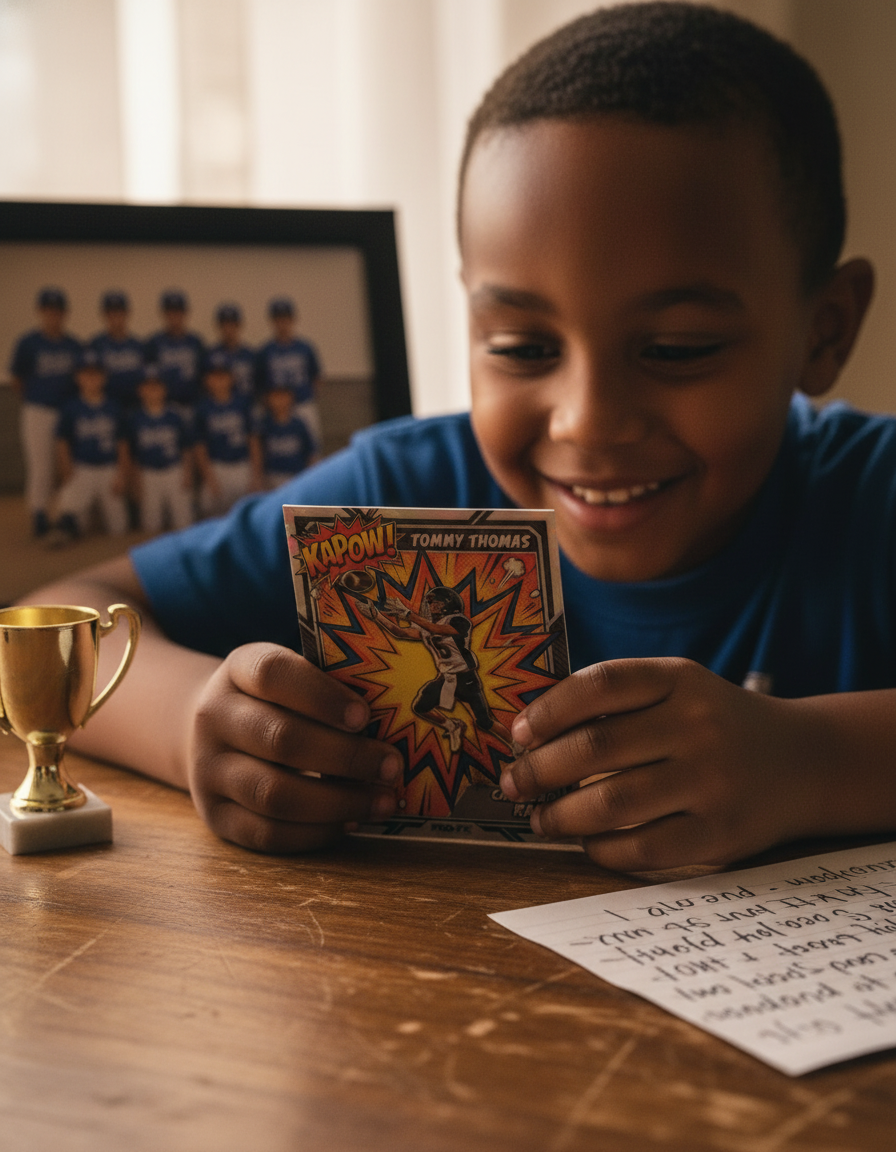
The format clicks for kids in a way photo prints don't — they already know what a trading card means. It has a front and a back. It's collectible. It looks like the ones the pros get. And this one is them.
Try it: Make a card for your athlete — upload a photo, add their name, number, team, and a stat or two. It takes about 60 seconds, and you can print it or share it digitally. Make one for a birthday, or a full set of the whole roster for the end of the season.
A few ways parents actually use them:
- The rookie card for a birthday — their first season, framed on the shelf by the couch.
- The multi-sport set for the holidays — one card per sport they played this year, clipped together as a stocking stuffer.
- The career set for an older kid — one card per year, so you can literally watch them grow from the first blurry tee-ball photo to varsity.
Because a card is small and cheap to reprint, it's the rare keepsake you can hand out. Grandparents get one, the kid keeps one in their backpack, one goes on the fridge.
Engraved and embroidered options
Engraving and embroidery turn everyday gear into something that could only be theirs. The trick is putting the name or number somewhere they'll see it every single day.
- Engraved dog tags with their name, number, and team — kids wear these constantly, to school and everywhere else.
- An embroidered equipment bag or backpack with their name stitched on the side, so it's never the identical bag as everyone else's on the bench.
- A name-plate water bottle. They carry it to every practice; a laser-etched name means it actually comes home instead of living in the lost-and-found.
- An embroidered warmup hoodie with their number on the sleeve — the thing they wear to school, not just to games.
- An engraved first-season keepsake — a baseball, a mini bat, a puck — dated and named, from the year they started.
- A custom room or locker nameplate. A little door sign or bedroom plate with their name and number. Cheap, and weirdly beloved by kids who are proud to have a "spot."
Rule of thumb: engrave the things they use in public. A name on a water bottle gets seen by teammates every day, which — for a kid — is the whole point.
Memory and milestone gifts
Some gifts aren't for right now. They mark a specific moment so it doesn't blur into all the others.
- Their first jersey, framed. When they outgrow it, don't donate it — shadow-box it with the year and the team. The jersey they could barely fill out becomes the best thing on their wall.
- A game-ball display. The ball from their first hit, first goal, or first win, on a small stand with a dated plate.
- A career stats print. A clean, framed layout of their numbers by season — the kind of thing they'll actually want in a dorm room someday.
- A medal and ribbon display. A simple wall hanger that gets the medals out of the tangled drawer and turns them into something they see.
- A milestone journal. A plain book where you log the firsts as they happen: first goal, first strikeout, the game they cried and came back the next week anyway.
If this thread appeals to you, it's the whole idea behind a youth sports memory book — one place the season lives, instead of scattered across a camera roll.
Birthday vs. holiday vs. season-end framing
Here's the useful trick: most of these gifts are the same object, reframed by timing. The occasion changes what the gift means, so you can lean into whichever one is coming up.
- Birthday (mid-season): the gift is about right now. A card of their current team, an action shot from last week's game. It says "I see who you are this season."
- Holiday: the gift is about the year. Pull together everything from all the sports they played — a card per sport, a photo book from spring through fall. It says "look what a year you had."
- Season-end: the gift is about this team. A team card set, a framed final-game photo, the jersey from the season they just finished. It says "we did this together." It's also the natural on-ramp to senior night gifts when they're older.
Same photo, same card, same jersey. The framing decides whether it reads as a birthday present, a holiday keepsake, or an end-of-season goodbye.
Budget tiers
You do not need to spend much for a gift to land. In fact, the cheapest ideas here are usually the most kept.
| Budget | What it gets you |
|---|---|
| Under $15 | A single custom trading card, engraved dog tags, a name-plate water bottle, a photo ornament |
| $15–$50 | A framed action shot, a season photo book, an embroidered bag, a full team card set |
| $50+ | A shadow-boxed first jersey, a framed career-stats print, a multi-season card collection, a "big-league" poster |
The most-kept gift on this list — a card with their name on it — sits in the cheapest tier. Thoughtful beats expensive with kids, every time.
What kids actually keep vs. lose
Watch what happens to the stuff a kid accumulates over a few seasons and a pattern shows up fast.
What gets lost: trophies (shelf, then a box, then the garage), medals (a tangled pile in a drawer), generic team merch. These are about the event — and once the event is over, so is the attachment.
What gets kept: the small, personal, name-on-it things. The card in the backpack. The dog tag they still wear. The framed shot on the wall. The jersey they refuse to let you donate.
The difference is whose story the object tells. A trophy tells the league's story — "this tournament happened." A personalized gift tells the kid's story — "this is me, this is my number, this is the year I got good." Kids hold onto the second kind because, at an age when they're still figuring out who they are, it's proof.
That's the whole game. Skip the generic. Make it about this kid, this season. They'll keep it.
More from this guide: