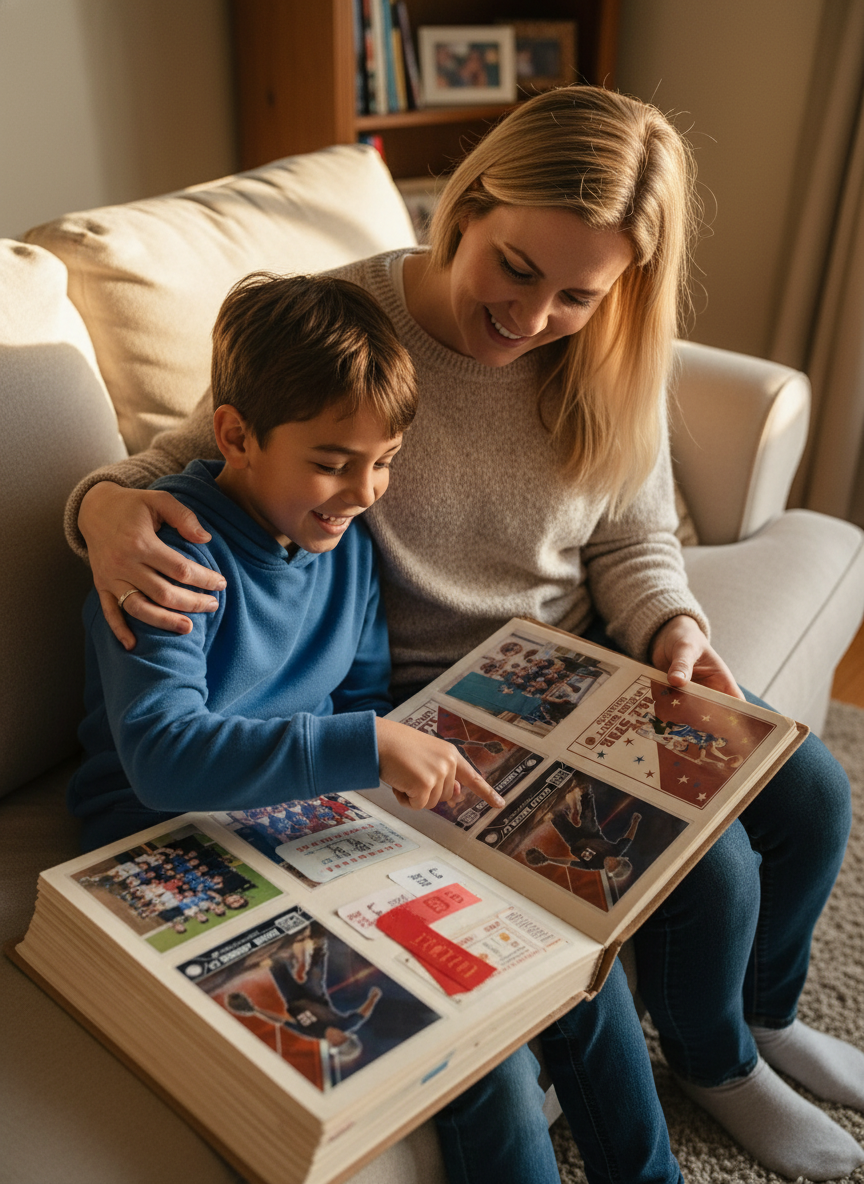

No sport lives on a rectangle of cardboard quite like hockey does. Ask anyone who grew up with the game and they can still picture the shoebox — the O-Pee-Chee packs with the chalky gum, the rookie card everyone traded up for, the goalie mask staring out from a photo taken in some drafty rink. Hockey and hockey cards grew up together.
So it lands differently when the kid on the card is your kid. Here's how to make a custom hockey card from a single photo — one that captures the early mornings, the frozen toes in the stands, and the season you'll want to remember.
Why hockey players make great cards
Hockey has a look no other sport has. The gear alone tells a story: the sweater, the helmet, the stick, the breath hanging in the cold air. A hockey photo already feels like a card before you do anything to it. There's a reason the sport's card culture runs so deep — the frozen-rink aesthetic and the gear-heavy silhouette practically design themselves.
That heritage works in your favor. When you hand a hockey family a custom card, you're not inventing a format — you're speaking a language they already love.
The photo: what makes a great hockey card
The photo does most of the work, and hockey gives you some of the best action in youth sports to shoot. A few shots that translate beautifully into cards:
- The slap shot — mid-windup or at the moment of contact, stick flexed and snow spraying. Pure power, and it reads instantly as hockey.
- A stride up ice — the player low and leaning into a crossover, puck on the blade. Motion and speed in a single frame.
- The goalie in the crease — down in the butterfly or squared up to the shooter. Goalies photograph like nobody else on the ice.
- The posed portrait with the stick — the classic one knee down, stick across the pads, or standing tall in front of the boards. This is the timeless team-photo-day look, and it never goes out of style.
A quick tip specific to hockey: the helmet and mask. A cage or full mask hides the face, which is what makes the goalie shot iconic — but it can also hide your kid. If you want the face clearly on the card, grab a portrait with the helmet off or the cage pushed up, or use a warmups photo. Both a masked action shot and a helmet-off portrait are great; just pick on purpose.
Beyond that, the usual rules apply: a clear, well-lit photo with the player as the focus, vertical framing when you can. Rink lighting can be dim, so a bright shot helps — but the generator is forgiving. For the full walkthrough, see How to Make a Custom Trading Card.
The stats: what goes on the back
Half the fun of a hockey card is the back. This is where a photo becomes a card — a stat line that makes it feel official. Hockey has a rich, specific stat language, and using the real numbers is what sells it.
For skaters, the classics:
| Stat | What it means |
|---|---|
| G | Goals |
| A | Assists |
| P (or Pts) | Points — goals plus assists |
| PIM | Penalty minutes (the badge of honor for the physical players) |
| +/− | Plus/minus — on-ice goal differential |
For goalies, a different — and just as beloved — set of numbers:
| Stat | What it means |
|---|---|
| SV | Saves |
| SV% | Save percentage |
| GAA | Goals-against average |
| SO | Shutouts (every goalie remembers their first) |
| W–L | Wins and losses |
You don't need a stats app or a perfect box score. A season summary is plenty — "14 G, 22 A, 36 P" or "3 shutouts, 1.85 GAA." If you don't track stats at all, that's fine too: a position, a jersey number, and the team name still make a complete, great-looking card. Made-up stats work perfectly for a joke card or a "future NHL first-rounder" gift.
Art styles that suit hockey
Every style works, but a couple were practically made for this sport:
- METALLIC — chrome, foil, and cold prismatic tones echo the rink itself. A METALLIC hockey card looks like it slid straight out of a premium pack.
- VINTAGE and ALL-STAR RETRO — the aged, old-collectible look leans right into hockey's deep card heritage. It's the O-Pee-Chee shoebox feeling, turned toward your own player.
- KAPOW! — an explosive starburst, great for a slap-shot or a big-hit action shot, with energy radiating out of the frame.
- GOAT-MODE — the modern neon-glow "insert card" look, the kind kids chase in packs today.
The same photo can become a dozen different cards depending on the style. Try the metallic version and the vintage version of the same shot and let the player pick their favorite.
Make your hockey card free: Start a card at /create — upload a photo, add a name, number, position, and stats, then pick a style. You'll have a finished custom hockey card in about a minute, ready to share or print.
Youth, travel, and house league
Custom hockey cards fit every level of the youth game:
- House league — one card a season, building a stack that grows with the player. First-year Mite to the day they age out.
- Travel and AAA — a card for each tournament run or each birth-year team, a record of every level they climbed.
- Learn-to-skate and first seasons — a card of a five-year-old in gear three sizes too big is a keepsake the whole family will fight over.
- Beer league and adult rec — grown players love a card of themselves just as much, and it's a perfect gift for the teammate who thinks he's a pro.
Cards like these are the natural building block of a season-by-season collection. If you're documenting a hockey career as it happens, see Youth Sports Memory Book Ideas for ways to turn a stack of cards into something you'll keep for good.
Team sets: one card per player
The biggest reason families reach for custom cards is the whole-team set. Team mode makes one card per player from your roster of photos, so every kid gets their own — same design, same style, their own name and number and stats. A few ways teams use them:
- Banquet handouts — every player gets their card at the end-of-season party, and they immediately start trading.
- Coach gift — the full roster in a binder or display case, the whole team the coach built in one place.
- Team collage — a single image of the entire squad, great for framing or as the cover of the set.
Handed out in a locker room or at a banquet, a team set does what hockey cards have always done: it turns a season into something you can hold, trade, and keep.
Digital or printed
Both come from the same design — the question is what you want to do with it:
- Digital is instant. Download it, text it to grandparents, post the big goal, keep the whole collection on your phone.
- Printed is the real, glossy, hold-it-in-your-hand card. It's the right call for team sets, banquet gifts, and anything you want a kid to actually shuffle through and trade.
Sports Card Maker is free to try — make and preview your first card at no cost. After that it runs on affordable credit packs with no subscription, and physical printed packs are a separate add-on when you want the real thing shipped to your door.
Ready to make one?
Grab your best rink photo — the slap shot, the stride, the goalie squared up, or just the team-photo-day portrait — and turn it into the card. Your hockey player has earned a spot in the shoebox.
Related: