
Baseball invented the trading card. Long before basketball or football had a collectible culture, kids were flipping cardboard rectangles, memorizing batting averages off the back, and trading a Mickey Mantle for two of something else at the lunch table. The little stat line, the posed portrait, the team name in a colored banner — that whole visual language started here.
Which is why a custom baseball card of your own kid hits differently than almost any other keepsake. You're not inventing a format. You're dropping your Little Leaguer into the one that's been around for a century.
Here's how to make one from a single photo, and how to make it look like the real thing.
What makes a great baseball card photo
Baseball is unusually generous to photographers because the game freezes into iconic poses on its own. A few that always translate well onto a card:
- The batting stance. Loaded up in the box, bat cocked, eyes on the pitcher. It's the single most recognizable pose in the sport, and it reads instantly as "baseball card."
- The pitching windup. Leg lifted, glove tucked, that moment right before release. Dramatic and full of motion — perfect for the bolder card styles.
- The follow-through. Mid-swing with the bat wrapped around, or a pitcher's arm finishing across the body. Action shots like these suit the explosive, modern looks.
- The classic posed portrait. Down on one knee with a bat over the shoulder, or a glove-and-ball pose from picture day. This is the timeless, vintage-card composition, and it's the one grandparents recognize.
You don't need a pro camera. A clear phone photo where your player is the focus and reasonably well lit will do the job. Vertical framing sits most naturally on a card, since cards are taller than they are wide, but a horizontal action shot works too. For a full walk-through of photo tips and the whole flow, see How to Make a Custom Trading Card.
The stats that belong on a baseball card back
Half the fun of a baseball card has always been the back. No other sport built its card culture around a stat line the way baseball did — a kid can recite a hitter's average before they can spell the player's last name.
You don't need a full season of data. A handful of numbers makes the back feel authentic. Which numbers depends on whether your player hits, pitches, or both:
| Position | Stats that belong on the back |
|---|---|
| Hitters (position players) | AVG (batting average), HR (home runs), RBI, SB (stolen bases), maybe R (runs) and 2B (doubles) |
| Pitchers | W-L (win-loss record), ERA (earned run average), K (strikeouts), maybe SV (saves) and IP (innings pitched) |
| Two-way players | A short line of each — a couple of hitting numbers and a couple of pitching numbers |
For younger Little Leaguers where nobody's tracking ERA, don't sweat the precision. "Team: Riverside Reds — 2026 — First Base" with a fun highlight like "3 home runs, never stopped smiling" captures the season better than a spreadsheet. The card is a keepsake, not a scouting report. Put whatever makes your kid grin when they read it.
Styles that suit baseball
Baseball carries more nostalgia than any other sport, so the throwback styles land especially hard here:
- VINTAGE and ALL-STAR RETRO — the aged, mid-century look with the classic banner and worn-paper feel. On a baseball card, these are almost cheating; they tap straight into the format everyone remembers collecting.
- KAPOW! and ON-FIRE — explosive, high-energy looks that are great for a swing follow-through or a windup, where the motion of the shot matches the energy of the art.
- METALLIC — the modern chrome-and-refractor "chase card" look, the kind kids hunt for in a pack.
- VIDEO GAME and HERO-MODE — a lighter, playful take (arcade art, or your player as a cartoon superhero) that younger kids love seeing themselves in.
The same photo can become a dozen different cards depending on the style you pick, so if you're torn, try the vintage look first — for baseball, it's the one that feels like home.
Try it now: Make your first baseball card free — upload a photo, add a name, number, and a few stats, then pick a style. You'll have a finished card in about a minute, ready to print or share.
Little League, travel ball, and rec league
Custom cards fit every level of youth baseball, and each one uses them a little differently:
- Little League and rec ball — one card per season, building a collection as your kid grows. Spring 2025 first baseman, summer 2026 with a growth spurt and a new number. Line them up years later and you've got a flipbook of childhood.
- Travel ball — longer schedules, more tournaments, and parents who are already deep into the sport. Travel teams love full sets, and the kids genuinely trade them.
- All-star and tournament teams — a card commemorating the run to the championship, handed out after the final game while it's still fresh.
Because you can make one card or a whole roster's worth, cards scale from a single keepsake for your own player up to a set for every kid on the bench.
Team sets and coach gifts
This is where custom cards really earn their keep. Team mode makes one card per player from the roster, plus team collages, so a whole set comes together fast.
A few ways parents use them:
- Banquet handouts — a card for every player, passed out at the end-of-season party. Kids trade them on the spot.
- The coach's binder — the full roster in a card binder, presented as the team gift. A baseball coach, of all coaches, understands exactly what they're holding.
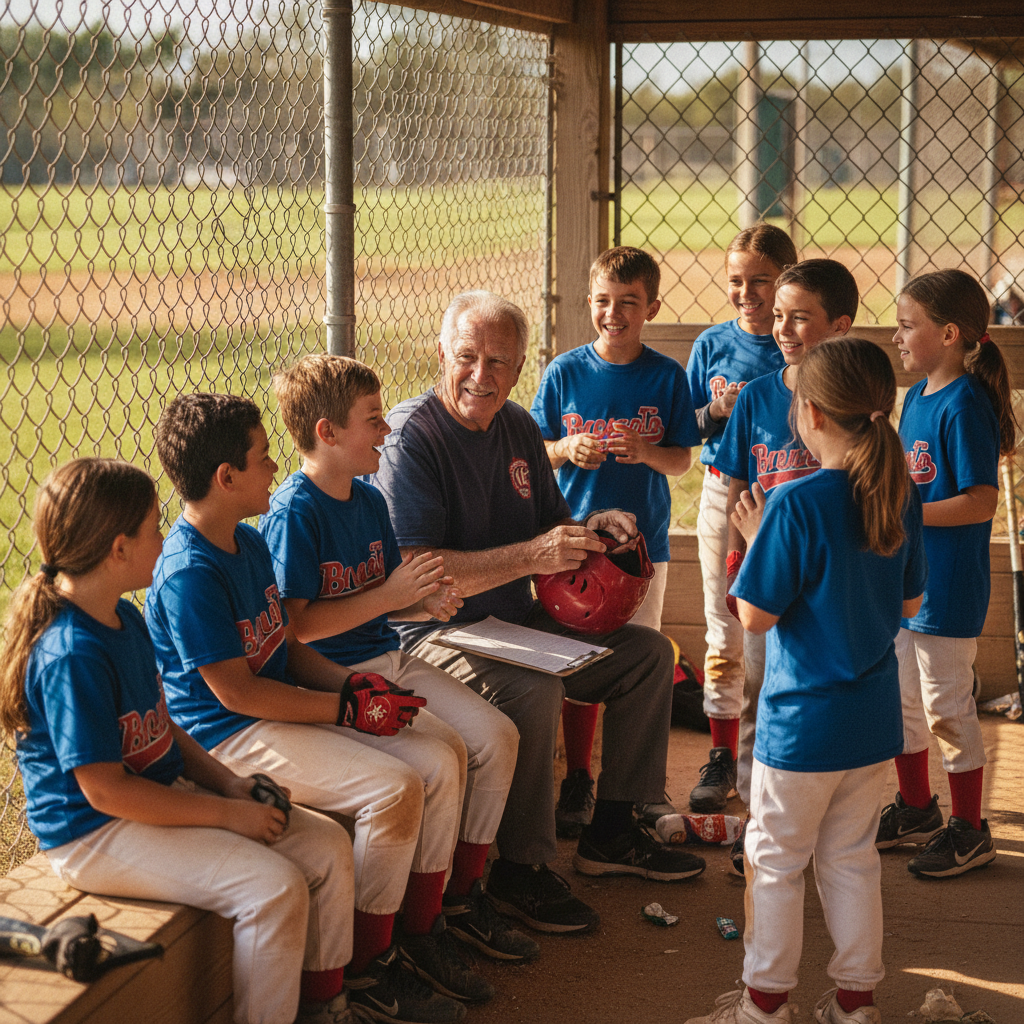
- The coach's own card — their photo on the front, the season record on the back ("14-4, division champs"). Almost no coach has ever received their own baseball card, and it lands every time. We break this down in Little League Coach Gift Ideas.
Baseball coaches grew up inside this format. A card of the season — the team, the record, the kids' names — speaks their language in a way a mug never will.
Print or share
Once the card looks right, you've got options. Download the digital version to text to grandparents or post online. Or order physical printed packs — real, glossy cards shipped to you, ideal for team sets, banquets, and anything kids will actually hold and trade.
Making and previewing your first card is free. After that it runs on affordable credit packs — you only pay for what you make, and there's no subscription. Physical prints are a separate add-on when you want the hold-it-in-your-hand version.
Baseball gave us the trading card. Making one of your own player is just giving the tradition back to the kid who's living it now. Grab a photo, start a card, and see your first one in about a minute.
Related guides: